
Independent storage advice for UK homes
Storage that fits the space you have.
Practical guides for low beds, narrow halls, wardrobes, drawers and shelves. Check what fits, then make everyday things easier to reach.
Know your bed-rail gap? Try the fit check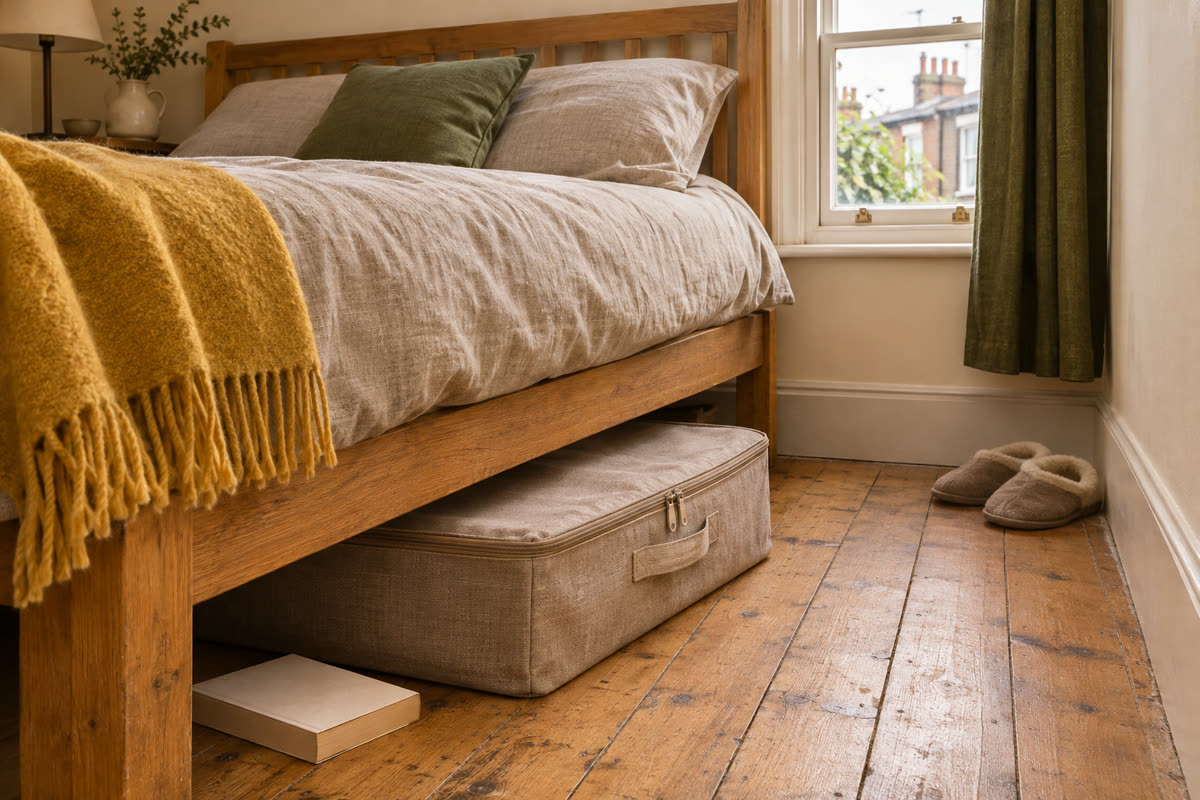
Leave room to reach, pull out and open what you store.
Choose your space
Where could you use more room?
Start with the spot that makes everyday life awkward.
Under-bed storage
Clear the bed rail, work around the legs and leave room to pull a box out.
Shoe storage for narrow halls
Make room for everyday shoes without filling the route through the house.
Wardrobe organisers
Use the gap above folded clothes and make deep shelves easier to reach.
Drawer organisers
Choose dividers, trays and boxes that fit the drawer when it closes.
Boxes, bags and shelving
Compare stackable boxes, vacuum bags and shelving for cupboards and utility spaces.
Work with what you have
A useful answer to an awkward space
Practical starting points for the storage problems that keep coming back.
Hallway
Keep shoe storage clear of the front door
Map the door swing and the space left for people before choosing a cabinet or rack.
Read the guideWardrobe
Make deep shelves easier to reach
Give the back row a route out, rather than packing another layer in front of it.
Read the guideDrawers
Plan a drawer around what goes in it
Start with the contents, then check tray footprints, loaded height and usable drawer travel.
Read the guideBoxes & shelves
Choose a box around the shelf you have
Compare the supported footprint, usable interior and space to open or lift the box.
Read the guideBefore you order
Three things worth measuring
A box can fit in the space and still be awkward to use. Check the whole route before choosing a size.
- 01
The tightest point
Check the lowest rail, narrowest opening or bit of skirting that sticks out.
- 02
The room to open it
Allow for the pull-out, the lid and the space your hand needs to reach inside.
- 03
The thing going in
Compare your largest pair of shoes or thickest folded blanket with the usable space inside.
Try a quick check
How much room is under your bed?
Enter the gap below the lowest rail to compare three box heights.
Quick fit check · Under the bed
Compare the three box heights
- Really Useful 10L8.5 cmCheck clearance
- Really Useful 33L16.5 cmCheck clearance
- SmartStore 60L18.5 cmCheck clearance
Leave space above the box to slide it past the rail.
This checks height only. Check the width, bed supports, floor and room to open the lid before ordering.
Compare the boxes →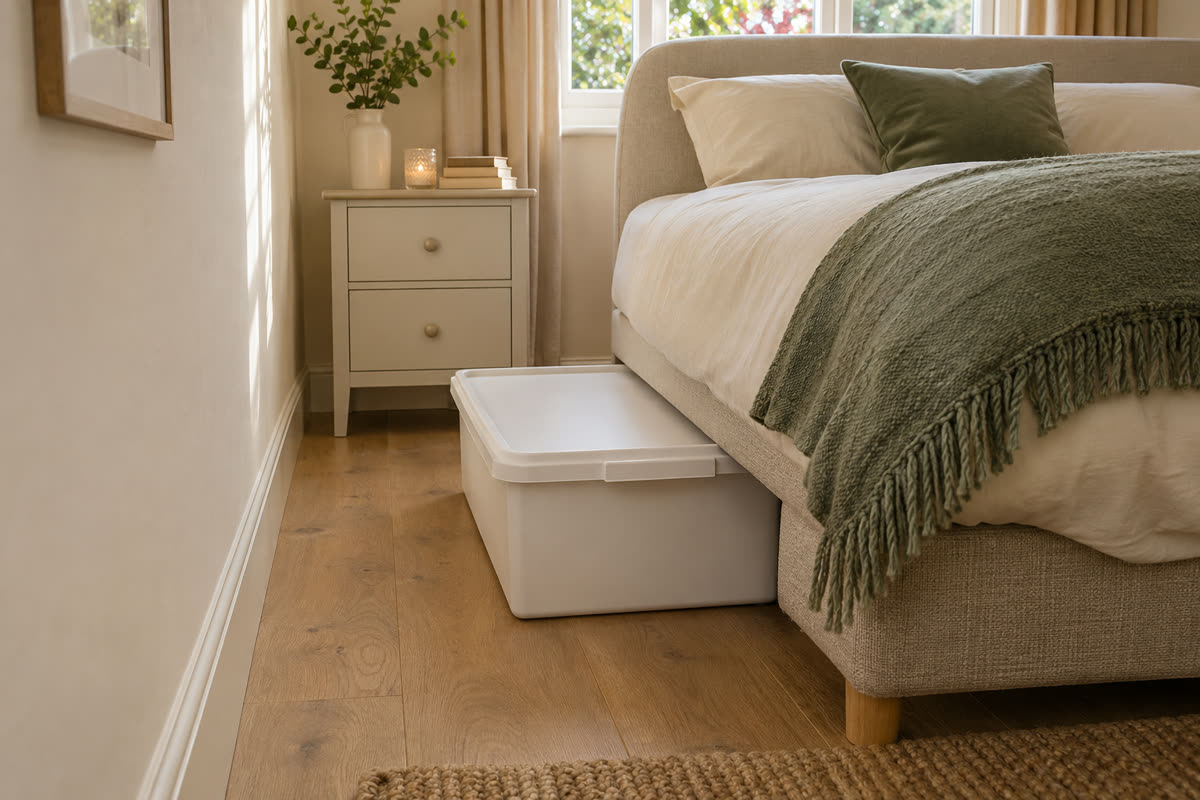
Check the width, supports and space to open the lid as well.
The boxes in this check
Read the full box comparison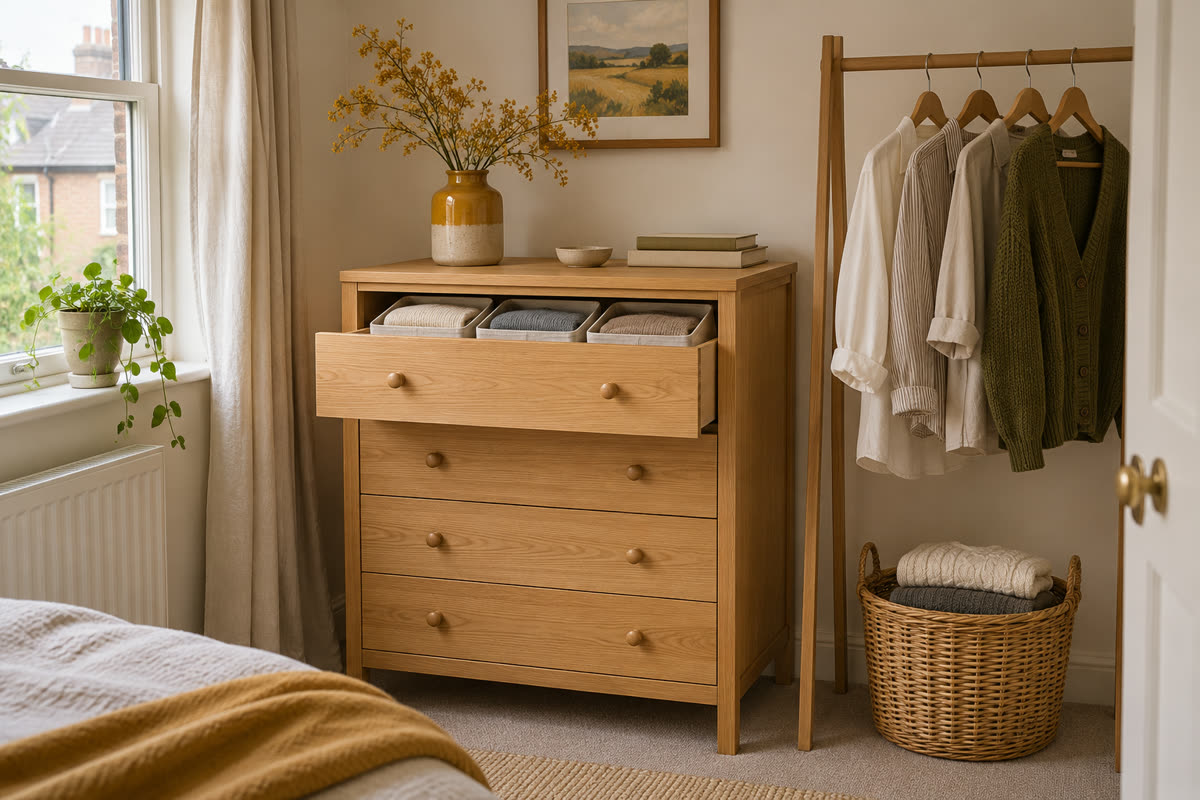
Make the inside work harder
Give the things you use a reachable place. Start with the opening and the contents, then plan the layout around both.
Our approach
Useful details before you choose
We use published specifications to explain how much space a product needs.
Where both are available, we show how room fit differs from usable storage.
Each recommendation explains what to measure and where it may fall short.
Questions before you choose
Where should I start when choosing storage?
Start with the place you need to organise: under the bed, the hallway, a wardrobe, a drawer or a shelf. The topic guides explain the formats that suit each space. Measure the tightest opening, the room to use the storage and the things going inside before choosing a product.
What should I measure before buying an organiser?
Record the smallest opening the complete item must pass, the usable space behind it and the movement needed to open or remove it. Compare your contents with the usable interior as well as the outside dimensions. Our measuring guides work through the checks for each storage area.
Which guide should I use if I already own the storage?
Use the practical guides for layouts, access problems and organising what you have. Buying guides compare selected products and their limitations when you need to add or replace something. A new container is not always necessary: changing the contents, grouping or position can be enough.
What does the under-bed fit check measure?
It compares the outside height of three selected boxes with your entered bed-rail gap. It does not check width, bed supports, carpet or the space to open the lid. A positive height result is a starting point; the buying guide explains the remaining fit checks.
How do you compare products?
We compare documented dimensions, features and access requirements for the selected product variant. Worked examples explain how those details affect the space you need. The editorial and source policies explain how we check variants and handle missing or conflicting specifications.